Korea Travel Budget 2026: Daily Costs at $50, $100, $200
“A complete, honest breakdown of what Korea costs—accommodation, transport, food, and daily budgets at three levels.”
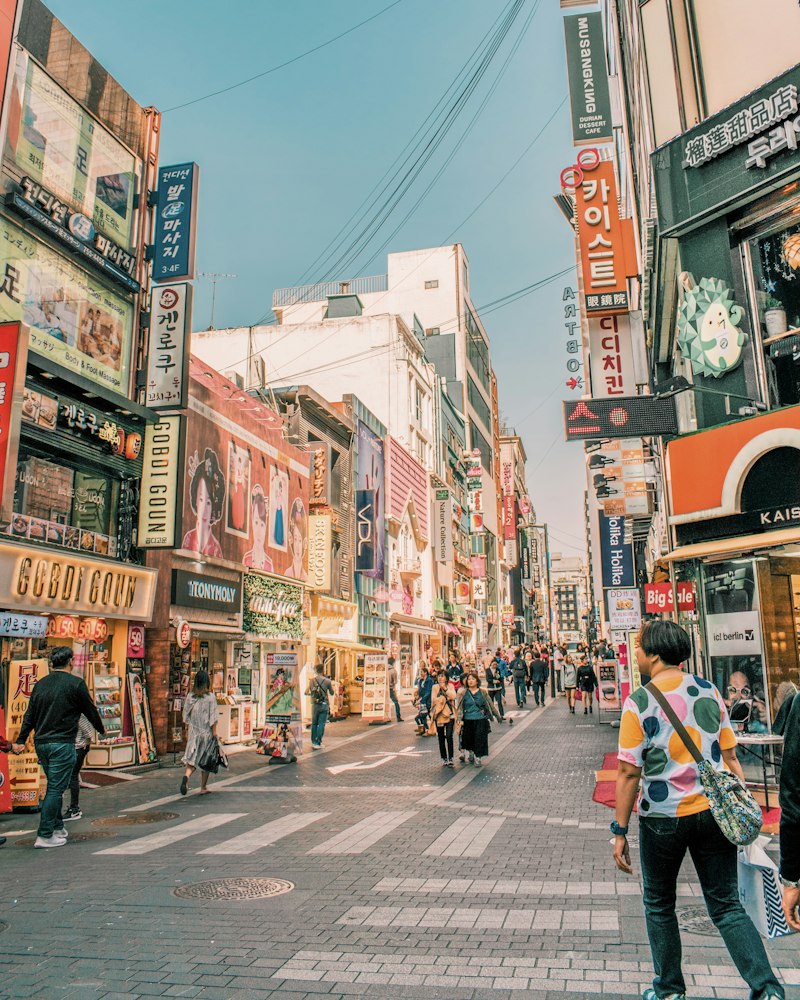
Korea Travel Budget Guide 2026: What a Trip Actually Costs
Korea consistently surprises first-time visitors. The assumption—especially among travelers calibrated to European or Southeast Asian pricing—is that a country with this level of infrastructure, food quality, and rail connectivity must be expensive. The reality is more useful: Korea sits in a productive middle ground. The free attractions are genuinely world-class. The local food is exceptional at modest prices. And the transport network, which would be a premium experience in most countries, is priced for everyday Korean use.
Here is a complete, honest breakdown of what to expect in 2026—by category, with realistic daily budgets at three levels.
| Category | Budget (per day) | Mid-range (per day) | Comfort (per day) |
|---|---|---|---|
| Accommodation | $15–30 | $60–100 | $100–200 |
| Food | ₩15,000–25,000 | ₩30,000–60,000 | ₩60,000–120,000 |
| Transport | ₩3,000–5,000 | ₩5,000–15,000 | ₩15,000–40,000 |
| Activities | ₩0–10,000 | ₩10,000–30,000 | ₩30,000–80,000 |
| Daily Total | ~$30–50 | ~$80–150 | ~$150–300 |
All prices are 2026 estimates. Exchange rate used: $1 ≈ ₩1,350.
Accommodation Costs in Korea
Korea's accommodation market is broad and competitive, with genuine options at every price point.
Budget (Hostel / Guesthouse): $20–40 per night
Dormitory hostels and capsule hotels in Seoul—particularly in Hongdae and Insadong—consistently deliver clean, well-located beds in this range. Many include free breakfast and common lounges. Hanok guesthouses in Jeonju and Gyeongju offer traditional character at similar prices.
Mid-Range (Business Hotel / Boutique): $60–120 per night
Korean business hotel brands (Toyoko Inn, Benikea, smaller independents) punch above their category. A ₩80,000–₩150,000 room in any major city typically delivers a clean en-suite bathroom, fast Wi-Fi, and a central location. Boutique hotels in Seongsu or near Bukchon add personality without a dramatic price increase.
Luxury ($150+ per night)
The international chains are well represented in Seoul, Busan, and Jeju. The Park Hyatt and Four Seasons in Seoul are internationally ranked, and Korean luxury hotels are consistently cited for their exceptional service. Rates remain notably lower than equivalent properties in Tokyo.
Hotels and guesthouses can be compared across major booking platforms including Booking.com, Agoda, and Hotels.com.
Before you book, note that availability tightens sharply during Korean public holidays. The Korea Trip Checklist 2026 covers a full pre-departure planning timeline including accommodation strategy for busy travel periods.
eSIM & Pocket Wi-Fi
Korea has some of the fastest and most consistent mobile data coverage in the world. Getting connected is essential before the first subway ride—Naver Map, Kakao T, and most essential tools require an active data connection.
An eSIM is the most practical option for most international travelers. Purchase and activate it before you board, and your phone will have an active data connection the moment you clear customs at Incheon. Plans start from around $7.99 for short stays and scale to unlimited monthly plans. Compatible with most unlocked smartphones from 2019 onwards.
Pocket Wi-Fi is a reasonable alternative for groups sharing a single device. Rental counters at Incheon Airport Terminals 1 and 2 are efficient; plan for ₩8,000–₩12,000 per day. The disadvantage: a dead battery or forgotten device means the whole group loses connectivity simultaneously.
T-Money Card & Subway
| Transport | Fare (2026) | Notes |
|---|---|---|
| Seoul Subway | ₩1,550 base (card) / ₩1,650 (cash) | T-money card required |
| City Bus | ₩1,550 base (card) / ₩1,650 (cash) | T-money card recommended |
| Taxi (base fare) | ₩4,800 | Night surcharge 20–40% (10pm–4am, peak 11pm–2am) |
| KakaoTaxi / UT | Same as metered | App booking, English available |
| AREX (Airport) | ₩11,000 (direct) | 43 min Incheon → Seoul Station |
Fares are official 2026 rates. Use a T-money card to avoid cash surcharges.
Seoul's subway is one of the largest metro networks in the world and one of the cheapest per journey. The base fare is ₩1,550 with a T-money card (₩1,650 for a cash single ticket), with a small distance add-on on longer rides—still under $1.20 USD for most journeys. The T-Money card is a rechargeable IC card that covers subway, city bus, and taxi payments across virtually every Korean city. Purchase one at any convenience store for ₩4,000 and reload as needed.
For a week of active travel, load ₩50,000–₩100,000. The card works in Busan, Gyeongju, Jeonju, and throughout the country's transit network. The Incheon Airport to Seoul Guide covers the fastest and most cost-effective way to reach the city from the airport—the T-Money card works on all transit options there.
KTX: Inter-City Travel
The KTX high-speed rail network is one of the most compelling logistical arguments for traveling beyond Seoul. The Seoul to Busan route—325km—takes under two and a half hours by KTX Express, with trains departing every 15–30 minutes throughout the day. Standard class costs approximately ₩59,800 ($43 USD) one-way.
The KTX connects Seoul to all major regional destinations: Busan, Gyeongju (via Singyeongju Station), Gwangju, and Daegu. For most routes within Korea, the combination of price, frequency, and journey time makes KTX the default choice over flying or bus travel.
Book through the Korail Talk app or the official Korail website. Seoul–Busan seats on Friday evenings and Sunday afternoons fill weeks in advance; mid-week trains rarely sell out and can be booked same-day.
Taxis & Kakao T
Metered taxis in Korea are reliable and reasonably priced by international standards. A short city fare runs ₩3,000–₩8,000. Download Kakao T before you travel—it shows the estimated fare before you confirm, allows you to request an English-speaking driver, and creates a digital record of your journey. For late-night travel or destinations poorly served by transit, it is an affordable and accountable option.
Food Costs in Korea
Food is consistently where Korea overdelivers at every price point.
Street Food & Convenience Stores: $3–8 per meal
Tteokbokki, hotteok, and kimbap from street stalls cost ₩2,000–₩5,000. Convenience stores—GS25, CU, and 7-Eleven—stock prepared foods including triangle gimbap, instant noodles made at in-store hot water counters, and ready-to-eat meals. A full convenience store meal for under ₩5,000 is a legitimate daily standard, not a compromise.
Local Restaurants: $8–15 per meal
Korean lunch sets (정식) deliver rice, soup, and four to six banchan side dishes for ₩8,000–₩15,000. This is the undisputed best-value eating in the country. Portions are large, quality is consistent, and the experience is entirely local. The same restaurants that charge ₩25,000 for dinner often offer equivalent quality at lunch for half the price.
Western Food & Fine Dining: $20+
International restaurants in Gangnam and Itaewon run ₩25,000–₩60,000+ per person. Korean fine dining—Michelin-starred restaurants are present in Seoul, Busan, and Jeonju—is competitively priced by Tokyo or Paris standards, often with longer tasting menus at a fraction of the equivalent price.
Activities & Entrance Fees
A significant proportion of Korea's best experiences are free.
Free attractions:
Paid attractions:
Sample Daily Budgets
Planning a trip to Korea?
You have the costs. The planner builds the days that fit the budget you picked, city by city, with each stop linked into Naver Map. No sign-up needed.
Build My Korea Plan →These figures cover accommodation, three meals, city transport, and modest activity costs. International flights are excluded.
Backpacker: $50–70 per day
Hostel dormitory, street food and convenience store meals, subway travel only, free and low-cost attractions. This budget is achievable without meaningful compromise across Seoul, Busan, Gyeongju, and Jeonju. The key variable is accommodation—a private room in any city immediately pushes costs to the next tier.
Mid-Range Traveler: $100–150 per day
Private room in a business hotel, two sit-down restaurant meals per day, subway plus occasional taxi, one paid attraction. This is the practical sweet spot for most independent travelers—comfortable, unhurried, and with room for spontaneous spending.
Comfort Traveler: $200+ per day
Boutique hotel or international chain, quality restaurant dinners, Kakao T when convenient, no budget constraints on activities or shopping. Korea at this level remains significantly cheaper than an equivalent standard in Tokyo or Singapore, and the service quality is comparable or better.
Money-Saving Tips for Korea
Korea rewards travelers who do their logistics homework. The country is not cheap in the way that Thailand or Vietnam are cheap—but it is genuinely affordable for what it offers, and the gap between budget and quality is narrower here than almost anywhere else in the world.
For a complete day-by-day itinerary built around this budget framework—Seoul, Gyeongju, Busan, and Jeonju—the Korea 10-Day Itinerary covers the route with transit connections and pacing guidance.
Frequently Asked Questions
How much does a trip to Korea cost per day in 2026?
Budget travelers spend around $30–50/day. Mid-range is $80–150/day. Comfort travelers should budget $150–300/day. These figures include accommodation, three meals, city transport, and modest activity costs. International flights are excluded.
How much does a taxi cost in Seoul in 2026?
The base fare is ₩4,800 (about $3.50). A 5km ride costs roughly ₩8,000–10,000. A night surcharge applies from 10pm to 4am, peaking at 40% between 11pm and 2am (20% from 10–11pm and 2–4am). Use Kakao T or UT to book in English and see the estimated fare before confirming.
How much is the Seoul subway fare in 2026?
The base fare is ₩1,550 with a T-money card, or ₩1,650 for a cash single ticket, with a small distance add-on on longer rides. A T-money card saves money compared to single-journey tickets and also works on city buses across Seoul, Busan, Gyeongju, and most Korean cities.
Is Korea expensive for tourists?
Korea is generally more affordable than Japan or Western Europe. Street food and local restaurants are very cheap ($3–15 per meal). Public transport is excellent and affordable. The main costs are accommodation and activities, which vary widely by choice.
How much does food cost in Korea?
Street food and convenience store meals cost $3–8. Local restaurants typically charge $8–15 per meal. Western restaurants and fine dining cost $20–50+. Korean BBQ for two with drinks usually runs $30–60 depending on the restaurant.
Is the KTX train expensive?
KTX prices are reasonable for the speed and comfort. Seoul to Busan costs around $30–50 one way depending on the class and timing. Booking in advance through Klook or the Korail website gets you better prices and guarantees a seat on busy routes.
How much cash should I bring to Korea?
Bring enough cash for your first day — around ₩100,000–150,000 ($75–110 USD) for transport and initial expenses. Exchange at Incheon Airport arrival hall for competitive rates. Most payments in Seoul can be made by card, but traditional markets are cash only.
What is the official Seoul taxi base fare in 2026?
The Seoul taxi base fare in 2026 is ₩4,800 during the day. A night surcharge raises the base fare to ₩5,800 from 10pm to 11pm (20%), ₩6,700 from 11pm to 2am (40%), and ₩5,800 from 2am to 4am (20%).
What is the Seoul subway fare in 2026?
The Seoul subway base fare in 2026 is ₩1,550 with a T-money card (₩1,650 for a cash single ticket), with distance add-ons on longer rides.
How much does AREX cost from Incheon Airport to Seoul Station?
The AREX direct express train from Incheon Airport to Seoul Station costs ₩11,000 and takes 43 minutes.
What is the average hotel price per night in Seoul in 2026?
Budget hostels run $15-30/night, mid-range business hotels $60-100/night, and luxury hotels $100-200+/night in Seoul as of 2026.
How much is street food in Korea?
Street food like tteokbokki, hotteok, and gimbap typically costs ₩2,000-5,000 ($1.50-4 USD) per item in Korea.
Make a plan that fits your trip
You have the costs. The planner builds the days that fit the budget you picked, city by city, with each stop linked into Naver Map. No sign-up needed.
Build My Korea Plan →