Busan vs Jeju: Which Should You Visit First? (2026 Guide)
“Two completely different destinations, one classic Korea dilemma — and an honest answer for every traveler type.”
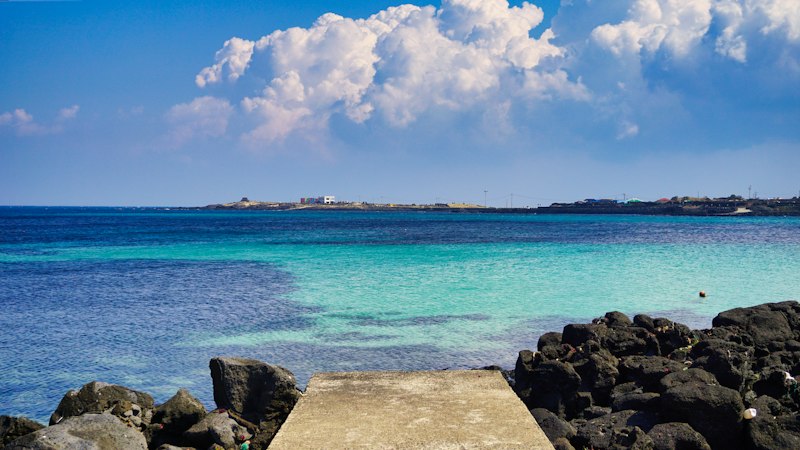
Busan vs Jeju: Which Should You Visit First?
Most first-time visitors to Korea build their itinerary around Seoul — and that makes sense. But at some point, usually while planning the middle days of a trip, the question arrives: Busan or Jeju? And is there time for both?
The two cities are completely different from each other, and both are completely different from Seoul. Busan is Korea's second-largest city: urban, coastal, walkable by subway, and built around a beach and food culture that surprises people expecting something more traditionally Korean. Jeju is a volcanic island with UNESCO World Heritage sites, a landscape that changes dramatically from black lava coastline to mountain crater, and a pace of life that has nothing in common with the mainland.
Here is the honest answer: if you have seven days or more in Korea, do both. The Busan-to-Jeju flight takes under fifty minutes and runs multiple times a day. For most trip structures, the natural sequence is Seoul to Busan by KTX, then a short flight to Jeju, then home from Jeju. But if you only have time for one, what follows is the framework for choosing correctly.
| Factor | Busan | Jeju |
|---|---|---|
| Getting there from Seoul | KTX 2.5hrs or flight 1hr | Flight only, 1hr |
| Best for | City + beach combo, first-timers | Nature, hiking, slower pace |
| Minimum trip length | 1-2 days | 2-3 days |
| Getting around | Subway, easy without a car | Car rental recommended |
| Food scene | Seafood markets, street food | Black pork, citrus, seafood |
If you only have one trip outside Seoul, Busan is easier to combine with a short itinerary. Jeju rewards travelers who can dedicate at least 2-3 full days.
Quick Answer: Which City Matches Your Travel Style?
The table below covers the most common traveler types. Find yourself, then skip to that section.
| Traveler Type | Best Pick |
|---|---|
| Nature lover / hiker | Jeju |
| Foodie & beach person | Busan |
| No rental car / public transport only | Busan |
| Honeymoon / romantic slow trip | Jeju |
| Short trip (2–3 days only) | Busan |
| First time in Korea, want it all | Start with Busan, then Jeju |
Why Visit Busan First?
Busan is the argument for starting your Korea trip outside Seoul. It is the country's second-largest city — a genuine port metropolis — but it combines the density of a major urban centre with beaches, dramatic hillside neighborhoods, a fully functional subway, and one of the most concentrated food cultures in the country. What makes Busan compelling as a first destination beyond Seoul is its legibility: you can understand the shape of the city within a day. The beach is at one end of the subway. The fish market is in the middle. The hilltop mural village is a twenty-minute walk from the main shopping district.
Busan is also the one major Korean destination that requires absolutely no rental car. The subway connects every location a first-timer needs — Haeundae, Gamcheon, Jagalchi, Nampo-dong, and Seomyeon — and runs frequently until midnight. For travelers who feel uncomfortable hiring a car abroad, or who simply want to minimize logistics, Busan removes all the friction that Jeju introduces.
Getting to Busan: KTX from Seoul
The Seoul to Busan KTX route is among the most-used rail connections in Korea. Trains depart from Seoul Station and Suseo (SRT), with KTX Express covering the 325km route in approximately two hours and twenty minutes. Standard class costs approximately ₩59,800 ($43 USD) one-way. Trains run every fifteen to thirty minutes throughout the day.
Book through the Korail Talk app or directly through Klook. Seats on Friday evening and Sunday afternoon trains fill several weeks in advance; mid-week travel rarely requires advance booking. Once in Busan, Busan Station connects directly to the subway network — Line 1 runs through the entire city and covers all major visitor destinations.
Busan Must-Do: The Essential Stops
The four non-negotiable stops in Busan, in rough subway order:
For food beyond the market: 밀면 (milmyeon, Busan-style cold noodles) is the city's own dish — thinner and slightly different from the naengmyeon you find in Seoul. 씨앗호떡 (seed hotteok) is the essential street food answer: a crisp sweet pancake stuffed with honey, seeds, and nuts, sold from carts near BIFF Square. You should eat at least two.
For a complete guide to where to stay, what to eat, and how to get around on your first visit, the Busan travel guide for first-time visitors covers the city in full detail.
Why Visit Jeju First?
Jeju is what happens when you take a volcanic island the size of Oxfordshire, add a UNESCO World Heritage triple designation, and subtract mainland Korean density. The island's landscape — black lava rock coastline, the Hallasan shield volcano rising to 1,947 meters at the center, crater lakes, waterfalls, and one of the world's longest accessible lava tubes — has no equivalent anywhere on the Korean peninsula.
The island rewards slow travel. Most of its best experiences require time to reach and time to experience: Hallasan takes four to eight hours to hike properly; Seongsan Ilchulbong is most atmospheric at sunrise; the Manjanggul Lava Tube is a forty-minute walk through a vast cave system that feels nothing like a tourist attraction. Jeju is not a city you blitz in a day.
For first-time visitors whose travel instincts run toward landscapes, walking trails, and the feeling of genuinely leaving the city behind, Jeju is worth prioritizing regardless of how much time you have. But come prepared: the island requires a rental car, and the budget should reflect that.
Getting Around Jeju: Rental Car Essential
The single most important practical fact about Jeju: public transportation does not effectively connect the island's major attractions. There is a bus network, and determined travelers use it, but the scheduling, frequency, and transfer complexity make it a frustrating experience for most visitors. The island was built to be navigated by car.
A rental car costs approximately $30–60 per day depending on vehicle size and season. International visitors need a valid driving license from their home country; an International Driving Permit (IDP) is required for most nationalities. Reserve in advance during Korean public holidays — particularly Chuseok and Lunar New Year — when Jeju fills with domestic travelers and rental availability collapses. Jeju's roads are straightforward, signage is bilingual, and traffic outside peak periods is minimal.
Jeju Must-Do: The Best of the Island
The island's major attractions divide naturally by geography:
East Jeju: Seongsan Ilchulbong (성산일출봉) — the UNESCO-listed tuff crater that rises from the sea on Jeju's eastern tip. The summit hike takes twenty to thirty minutes; the view across the surrounding coastline and out toward Udo Island rewards the early start. Combine this with the Seopjikoji cliff walk and the nearby Sangumburi crater for a full eastern day.
Central Jeju: Hallasan National Park — the dormant volcano at Jeju's heart, with two primary summit trails (Seongpanak and Gwaneumsa, both approximately 9km each way). Allow a full day; the Baekrokdam crater lake at the summit is the reward. Check trail conditions before departure — the summit closes during high winds and heavy snowfall from November through March.
West Jeju: Hyeopjae Beach (협재해변) and Manjanggul Lava Tube — Hyeopjae has the clearest water on the island, a shallow turquoise bay with the small Biyangdo island visible offshore. Manjanggul is one of the longest lava tube cave systems in the world; the accessible 1km section is cool, dramatic, and geologically unlike anything else in Korea.
For the full island in one place — how to book the flight cheaply, the Hallasan trail reservation system, Udo, black pork and haenyeo seafood, and how to split the island by region — the Jeju Island travel guide covers it in detail.
Cost Comparison: Busan vs Jeju
The budget difference between the two destinations is real, driven primarily by Jeju's rental car requirement and slightly higher accommodation costs during peak season. The breakdown below covers a three-night trip. For a full Korea budget analysis including daily spending at three levels, the Korea Travel Budget Guide 2026 covers all categories in detail.
| Expense | Busan | Jeju |
|---|---|---|
| Transport from Seoul | KTX $30–50 | Flight $30–80 |
| Accommodation (per night) | $40–100 | $50–120 |
| Rental car | Not needed | $30–60/day |
| Activities | $0–30 | $10–40 |
| 3-night budget (approx.) | $200–350 | $300–500 |
Recommended Itineraries
Planning a trip to Busan?
This guide gives you the shapes; the planner sequences them around your actual dates — which nights in Busan, which side of Jeju, and whether Hallasan fits, with every stop linked into Naver Map. No sign-up needed.
Build My Busan Plan →Busan needs two nights. That covers one day on the coast — Haeundae in the afternoon, Gwangalli Bridge after dark — and one day in the older city around Gamcheon Culture Village, Jagalchi Fish Market and BIFF Square, with Taejongdae on the morning you leave. A third night is only worth it if you are adding a day trip further down the coast.
Jeju needs three nights, and the island is organised by direction rather than by day. East is Seongsan Ilchulbong and Seopjikoji. West is Manjanggul Lava Tube, Hyeopjae Beach and Hallim Park. The centre is Hallasan, which takes a full day on its own if you hike it. What order you take them in depends on which side of the island you book, and skipping the Hallasan hike frees a day for the Olle trails instead.
Both together, starting from Seoul, is a seven-day trip: roughly three days in Seoul, two nights in Busan, two nights in Jeju. The routing that avoids backtracking is in the next section.
Which of these actually fits comes down to things a guide cannot know — how many days you have, whether Hallasan is a highlight or a hard pass, and whether anyone you are travelling with will get up for a sunrise at Seongsan.
How to Do Both in One Trip
The logistical case for combining Busan and Jeju is strong. The Busan-to-Jeju flight takes approximately fifty minutes and runs multiple times daily: Air Busan has the most frequent departures, followed by Jeju Air and T'way Air. Fares typically run ₩30,000–₩80,000 ($22–$60 USD) booked in advance; last-minute prices spike significantly.
The recommended routing from Seoul:
This avoids the common mistake of doubling back through Seoul between legs, and uses the Busan–Jeju segment as the cheapest flight in the itinerary. If you are arriving at Incheon for the first time, the Incheon Airport to Seoul Guide covers every transport option for that first connection — AREX express, limousine bus, and taxi — with current journey times and prices.
Book the Busan–Jeju leg early. Budget carrier seats in this price range sell out several weeks before departure, especially on Sunday evening flights catering to domestic travelers returning from Jeju weekends.
Ferry from Busan to Jeju: What to Know
A passenger ferry does operate between Busan and Jeju, run by Panstar Line. The crossing takes approximately 13 to 14 hours, departing Busan in the evening and arriving in Jeju the following morning. Cabins range from shared dormitory berths to private rooms, with fares typically running ₩50,000–₩150,000 depending on class and season.
The ferry is not the default choice for most travelers. The flight is faster and often cheaper when booked in advance. But the overnight crossing makes sense for a specific type of trip: travelers with a car who want to drive around Jeju rather than rent locally, those who enjoy the slow pace of a sea crossing, or anyone who finds the Busan–Jeju flight sold out during peak Korean holiday periods.
One practical note: ferry schedules are more sensitive to weather cancellations than flights, particularly during winter months and typhoon season (July–August). If your Jeju arrival time is critical, the flight is more reliable. If you have flexibility and want to bring a vehicle, the ferry is worth considering.
Our Verdict
Wherever you end up, book accommodation early. Busan's Haeundae district and Jeju's coastal towns both fill during Korean school holidays and public holiday weekends — availability and pricing move quickly in both directions.
Frequently Asked Questions
Is Busan or Jeju better for first-time visitors to Korea?
Busan is generally easier for first-timers since it's reachable by KTX train and offers both city life and beaches in one trip. Jeju requires a flight and rewards longer stays.
How do I get to Jeju from Busan?
The fastest option is a flight from Gimhae International Airport (Busan) to Jeju International Airport — about 50 minutes, with multiple daily departures on Air Busan, Jeju Air, and T'way Air. A passenger ferry (Panstar Line) also runs overnight between Busan and Jeju, taking approximately 13–14 hours. The ferry suits travelers bringing a car or those who prefer a slow crossing; most visitors choose the flight.
Can I visit both Busan and Jeju in one trip?
Yes, many travelers combine both. A common pattern is 2 days in Busan followed by 2-3 days in Jeju, connected by a short domestic flight.
Do I need a car in Jeju but not in Busan?
Busan has a subway system that covers most attractions. Jeju has limited public transit, so renting a car is recommended for exploring beyond the main city.
Which is cheaper to visit, Busan or Jeju?
Busan tends to be slightly cheaper since KTX train fares are lower than flights, and the city has more budget accommodation options than Jeju's resort-heavy market.
Make a Busan plan that fits your trip
This guide gives you the shapes; the planner sequences them around your actual dates — which nights in Busan, which side of Jeju, and whether Hallasan fits, with every stop linked into Naver Map. No sign-up needed.
Build My Busan Plan →