Gangneung Travel Guide 2026: Coffee Street and Beaches
“Anmok Beach's oceanfront cafes, sunrise at Jeongdongjin, soft tofu in Chodang village, and Ojukheon — all within two hours of Seoul by KTX.”
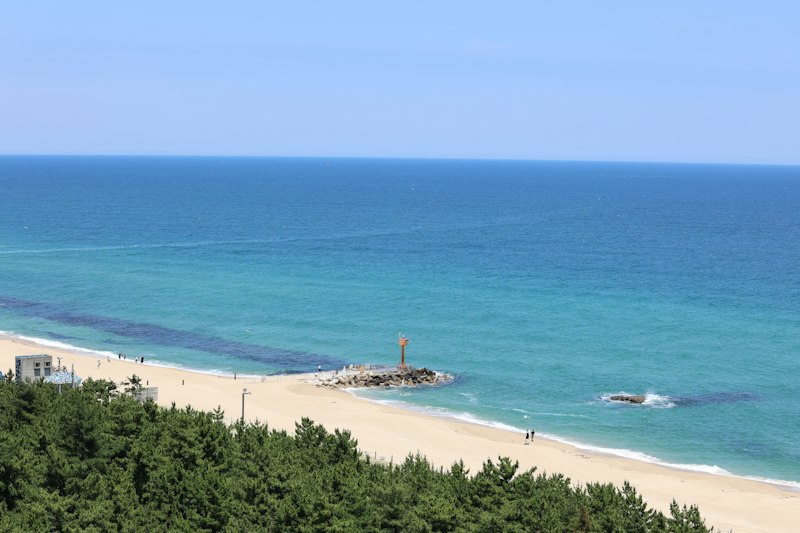
Gangneung Travel Guide 2026: Coffee, Beaches, and Day Trip from Seoul
Gangneung sits on Korea's east coast, two hours from Seoul by KTX, and offers one of the most satisfying day-trip or overnight combinations in the country. The city has built a genuine identity around coffee — with more specialty cafes per capita than anywhere else in Korea — while also offering wide-sand East Sea beaches, one of the Joseon period's most significant historical residences, and a soft tofu tradition rooted in a four-hundred-year-old family recipe.
The 2018 Winter Olympics brought Gangneung international attention, but the city's appeal is structural, not novelty. Korean domestic travelers have been making the KTX journey here since the Gangneung Line opened, and the infrastructure — cafe density, food quality, ease of movement between sites — has matured into something reliable and unhurried. For visitors based in Seoul, Gangneung is the most accessible east coast destination with the highest concentration of worthwhile things to do in a small geographic area.
A single day covers the essentials without feeling rushed. Two days allows for the morning pace that makes the coffee street and the beaches genuinely pleasurable. For visitors building a wider regional itinerary, Gangneung pairs naturally with Sokcho to the north — a comparison the regional transit guide covers in detail.
Getting to Gangneung: KTX from Seoul
The Gangneung Line KTX connects Seoul directly to Gangneung with no transfer required. Two departure stations serve this route:
| Departure Station | Journey Time | Economy Fare (one-way) |
|---|---|---|
| Seoul Station (서울역) | ~1h 50m | ₩27,600–₩29,000 |
| Cheongnyangni (청량리역) | ~1h 40m | ₩27,600–₩29,000 |
*Based on official Korail schedules, 2026. First class costs approximately ₩39,000. Fares vary slightly by service; weekday discounts apply on some departures.*
Trains run roughly every 30 to 60 minutes throughout the day. Cheongnyangni is the more convenient departure point for travelers staying in eastern or northern Seoul — it is on subway Lines 1, 2, and the Gyeongui-Jungang Line. Seoul Station is more central and is the better option for visitors staying in the Hongdae, Myeongdong, or Itaewon areas.
For booking, the Korail Talk app handles English-language reservations and accepts international credit cards. The KTX foreigner's guide covers the full booking process, seat selection, and when to book for weekend travel. Gangneung trains sell out quickly on Friday evenings and Sunday afternoons; mid-week departures remain available close to the travel date.
Getting Around: Gangneung Station to Key Destinations
Gangneung's attractions are spread across a wide area — a car or taxi is the most practical way to move between them. City buses run on most routes but can be infrequent outside peak hours.
| Destination | From Gangneung Station | Estimated Taxi Fare |
|---|---|---|
| Anmok Coffee Street (안목해변) | ~20 min by taxi / Bus 202 | ₩10,000–₩12,000 |
| Gyeongpodae & Gyeongpoho Lake (경포대) | ~15 min by taxi / Bus 202 | ₩8,000–₩10,000 |
| Chodang Sundubu Village (초당순두부마을) | ~20 min by taxi | ₩10,000–₩13,000 |
| Jeongdongjin (정동진역) | ~30 min by taxi / regional train | ₩25,000–₩30,000 |
| Naksan Beach, Yangyang (낙산해수욕장) | ~40 min by taxi or intercity bus | ₩35,000–₩45,000 (taxi) / ₩3,500 (bus) |
Naksan Beach is technically in Yangyang (양양), not Gangneung — it sits about 35 kilometres north along the coast. Intercity buses run from Gangneung Intercity Bus Terminal (강릉시외버스터미널), located about 10 minutes by taxi from Gangneung Station, with departures roughly every 20–30 minutes. The bus takes approximately 40 minutes and costs around ₩3,500 with a T-Money card. Naksan is one of Korea's most photographed East Sea beaches and pairs naturally with a Gangneung itinerary if you have a second day or are comfortable with the additional transit.
Anmok Beach Coffee Street
Anmok Coffee Street's origin story does not start with a barista competition or a specialty roaster — it starts with taxi drivers and coin-operated vending machines. In the 1980s, Anmok Beach was a quiet stretch of coastline accessible mainly by taxi, and drivers waiting for return fares developed a ritual around the roughly fifty instant coffee machines lined along the road. Each machine had a different sugar-to-cream ratio. Drivers developed favorites. Passengers noticed.
The shift from instant to specialty happened in 1998, when the first coffee bean shop opened on Anmok Beach. Around that time, roasters like Bohemian Roasters (founded by Park Yi-chu) brought Japanese-influenced charcoal-roast techniques to the coast. The Gangneung city government launched the first Gangneung Coffee Festival in 2009, cementing the city's reputation as Korea's coffee capital.
By 2026, more than thirty specialty cafes occupy the 500-metre stretch of beachfront, ranging from minimalist pour-over shops to large two-storey venues with floor-to-ceiling ocean views. The quality baseline is high — this is a competitive market where mediocre coffee does not survive the crowd of Seoul coffee culture that passes through every weekend.
What to order: single-origin drip coffee is the local default and costs between ₩6,000 and ₩9,000 at most shops. Cold brew is widely available in summer. Many cafes also serve Gangneung-roasted espresso drinks, which tend toward lighter, fruitier profiles than the Seoul chain standard.
When to visit: arrive on a weekday before noon for the best balance of ocean light and manageable crowds. Weekend afternoons bring consistent queues at the most-photographed cafes. A morning coffee walk followed by the drive south to Jeongdongjin makes a natural half-day sequence.
Jeongdongjin: Sunrise and the Beach Station
Jeongdongjin sits 18 kilometres south of Gangneung city centre, and it is best known for two things: the train station built directly on the beach, and the sunrise that attracts visitors on New Year's Eve and throughout the year.
Jeongdongjin Station is listed in the Guinness World Records as the railway station closest to the sea — the tracks lie roughly 50 metres from the waterline. The station itself is small and functional, but the visual of a KTX pulling into a platform with the East Sea immediately beyond is unusual enough to be its own attraction. Regional trains stop here; most visitors arrive by taxi or by intercity bus from Gangneung.
Morae Sihye Park (모래시계공원), directly adjacent to the station, takes its name from the 1995 Korean drama "Sandglass" (모래시계), which filmed extensively in the area. The park's large hourglass sculpture has become inseparable from the location's identity — it rotates once per year to mark the new year at midnight. The coastal cliff path from the park offers the same East Sea panorama that made the area's sunrise reputation.
For the sunrise: the Jeongdongjin beach faces directly east, making it one of Korea's most geometrically correct sunrise locations. The practical window is 05:30–06:30 in summer. Overnight KTX or intercity bus options allow sunrise visitors to arrive before dawn; a small cluster of guesthouses operates near the station for those willing to stay the night.
Gyeongpodae and Gyeongpoho Lake
Planning a trip to Gangneung?
Answer a few quick questions and get a personalized day-by-day itinerary — cities, food, and transit included. No sign-up needed.
Build My Gangneung Plan →Gyeongpoho (경포호) is a coastal lagoon separated from the East Sea by a narrow sand barrier, roughly 3 kilometres long and ringed by a well-maintained walking path. The Gyeongpodae pavilion (경포대), a restored Joseon-era structure on a low hill above the lake's western shore, has historically been one of Korea's most celebrated viewpoints — it appears in classical poetry and on historical maps. The current building is a reproduction, but the view over the lake toward the sea carries the same spatial logic the original writers were describing.
The lake circuit takes about an hour on foot at a comfortable pace. Cherry blossom season (late March to early April) and autumn colour (October–November) are the most photographed periods, but the pine forest along the eastern bank is pleasant year-round. Rental bicycles are available near the pavilion entrance for ₩5,000–₩8,000 per hour.
Gyeongpo Beach immediately east of the lake is one of Gangneung's main swimming beaches — a long, flat stretch of sand that fills with domestic tourists in July and August. Outside peak summer, it is clean, uncrowded, and walkable from the pavilion in ten minutes.
Chodang Sundubu Village
Chodang-dong is the neighbourhood that gave Korean soft tofu its most famous regional identity. The story begins with Heo Yeop, a Joseon-era official and the father of Heo Gyun — the author of "The Tale of Hong Gildong" (홍길동전), one of Korean literature's foundational texts, and of the poet Heo Nanseolheon (1563–1589). Heo Yeop made tofu using clean spring water and East Sea seawater, and named it <strong>Chodang</strong> after his pen name. The family home was located in what is now Chodang-dong, and a reconstructed traditional residence marks the site.
The result of that seawater process is a tofu with a softer texture and slightly mineral character compared to freshwater-made varieties. Chodang sundubu is served almost exclusively in Gangneung and has no practical equivalent in Seoul. The village contains a cluster of restaurants, most of them family-run and specialising in sundubu jjigae, sundubu bowls, and tofu side dishes. Meals typically cost ₩10,000–₩15,000 per person.
What to order: the full sundubu set — a stone pot of soft tofu stew, rice, and banchan — is the standard order. Several restaurants also offer raw sundubu (순두부 그대로) served plain with a dipping sauce, which is the format that best shows the seawater-made tofu's texture. Sundubu jjigae eaters who have only had the Seoul version will notice the difference immediately.
Chodang village is about 3 kilometres from Gyeongpodae, making it a natural lunch stop after the lake walk. Most restaurants open for lunch service from 11:00. No reservation is needed at standard meal hours, though the most popular spots develop queues on weekend afternoons.
Ojukheon
Ojukheon (오죽헌) is the birthplace of two of Korea's most recognised historical figures: Shin Saimdang (신사임당, 1504–1551), the scholar-artist whose portrait appears on the ₩50,000 note, and her son Yi I — known by his pen name Yulgok (율곡, 1536–1584) — the Confucian philosopher whose portrait appears on the ₩5,000 note.
The main structure, Mongnyong-sil (몽룡실), dates from the early Joseon period and is one of the oldest surviving wooden residential buildings in Korea. The compound includes a municipal museum with calligraphy, paintings attributed to Shin Saimdang, and biographical displays on both figures. Entry costs ₩3,000 for adults.
Ojukheon's name comes from the black bamboo (오죽, ojuk) that grows throughout the grounds — a visually distinctive plant with dark stems that is unusual outside this region of Gangwon. The bamboo grove is worth walking through regardless of how much Korean history you intend to absorb.
Allow 45 minutes to an hour for the site. It is about 10 minutes by taxi from Gangneung Station.
One-Day Itinerary from Seoul
The following sequence assumes a morning KTX departure and an early evening return — manageable as a day trip from Seoul without rushing.
07:00 — Depart Seoul Station or Cheongnyangni on the first or second KTX of the day. Arrive Gangneung ~09:00.
09:15 — Taxi from Gangneung Station to Anmok Beach Coffee Street. Morning light, minimal crowds. One or two cafes, 60–90 minutes.
11:00 — Drive south to Jeongdongjin (20 minutes by taxi). Walk the beach, see the station, Morae Sihye Park. 60–90 minutes.
13:00 — Return to Gangneung. Taxi to Chodang Sundubu Village for lunch. Sundubu set, 45 minutes.
14:30 — Gyeongpodae pavilion and Gyeongpoho lake walk. 60 minutes.
16:00 — Ojukheon, 45 minutes.
17:00 — Return to Gangneung Station by taxi. KTX back to Seoul, arriving ~19:00.
For visitors staying overnight: adding a second day allows for the Jeongdongjin sunrise (worth setting the alarm for), a slower morning on the coffee street, and time to explore the Jungang Market (중앙시장) in central Gangneung — a working local market with kalguksu restaurants that are among the city's quietest and most authentic meals.
The Korea 10-day itinerary includes Gangneung as an optional east coast day from the Seoul base — useful for itinerary builders who want a framework rather than building from scratch. For a comparable east coast day trip with a different character, the Gyeongju guide covers the opposite end of the historical spectrum.
Practical Tips
Seasons: summer (July–August) brings the largest crowds to Gangneung's beaches — Gyeongpo Beach fills to capacity on weekends. For the coffee street and the historical sites, there is no bad season. Cherry blossom season at Gyeongpoho (late March to early April) is the most visually dramatic single-visit timing.
Naver Map is essential for navigating between sites and finding specific restaurants within Chodang village, where signage is in Korean. Download the app before departure and use it for taxi directions — the English interface handles all core functions. The Naver Map English guide covers the key features relevant to tourists.
Payment: most Chodang restaurants and Anmok cafes accept card. A few of the oldest tofu restaurants are cash-only; carry ₩30,000 minimum.
Return trains: the last KTX from Gangneung to Seoul departs late evening. Check the exact schedule when booking the outbound train — return booking at the same time saves a queue at Gangneung Station.
Frequently Asked Questions
How long does the KTX from Seoul to Gangneung take?
KTX from Seoul Station to Gangneung takes approximately 1 hour 50 minutes. Trains departing from Cheongnyangni Station (also in Seoul) are slightly faster at around 1 hour 40 minutes. Economy fares run ₩27,600–₩29,000 one-way.
What is the Anmok Beach Coffee Street in Gangneung?
Anmok Coffee Street is a 500-metre beachfront strip with over 30 specialty cafes overlooking the East Sea. It began in the 1980s with roughly 50 instant coffee vending machines used by taxi drivers, transitioned to specialty cafes from 1998, and became nationally famous after the first Gangneung Coffee Festival in 2009.
Is Gangneung doable as a day trip from Seoul?
Yes. A morning KTX departure arrives in Gangneung around 09:00, leaving a full day for Anmok Coffee Street, Jeongdongjin, Gyeongpodae, Chodang Sundubu Village, and Ojukheon before the evening return train. Trains run frequently and the last KTX back to Seoul departs late evening.
What is Chodang Sundubu and where does it come from?
Chodang Sundubu is a soft tofu made using East Sea seawater, a recipe traced to Heo Yeop — a Joseon official and father of the writer Heo Gyun. He named the tofu Chodang after his pen name. The village in Gangneung's Chodang-dong neighbourhood has continued this tradition for centuries. Meals typically cost ₩10,000–₩15,000 per person.
What is the best season to visit Gangneung?
Gangneung is worth visiting year-round. Late March to early April brings cherry blossoms at Gyeongpodae lake. Summer (July–August) is peak beach season but the most crowded. Autumn (October–November) offers colour at Gyeongpodae and uncrowded coffee streets. Jeongdongjin sunrise is popular on New Year's Eve.
Make a Gangneung plan that fits your trip
This guide gives one version. Get one built around your own dates, budget, and interests — with Korean place names you can paste straight into Naver Map. No sign-up needed.
Build My Gangneung Plan →