KTX Korea Foreigner Guide 2026: Fares, KR Pass, Booking
“How to book KTX tickets online as a foreigner, what the KR Pass covers, seat classes explained, and station codes that confuse most first-time visitors.”
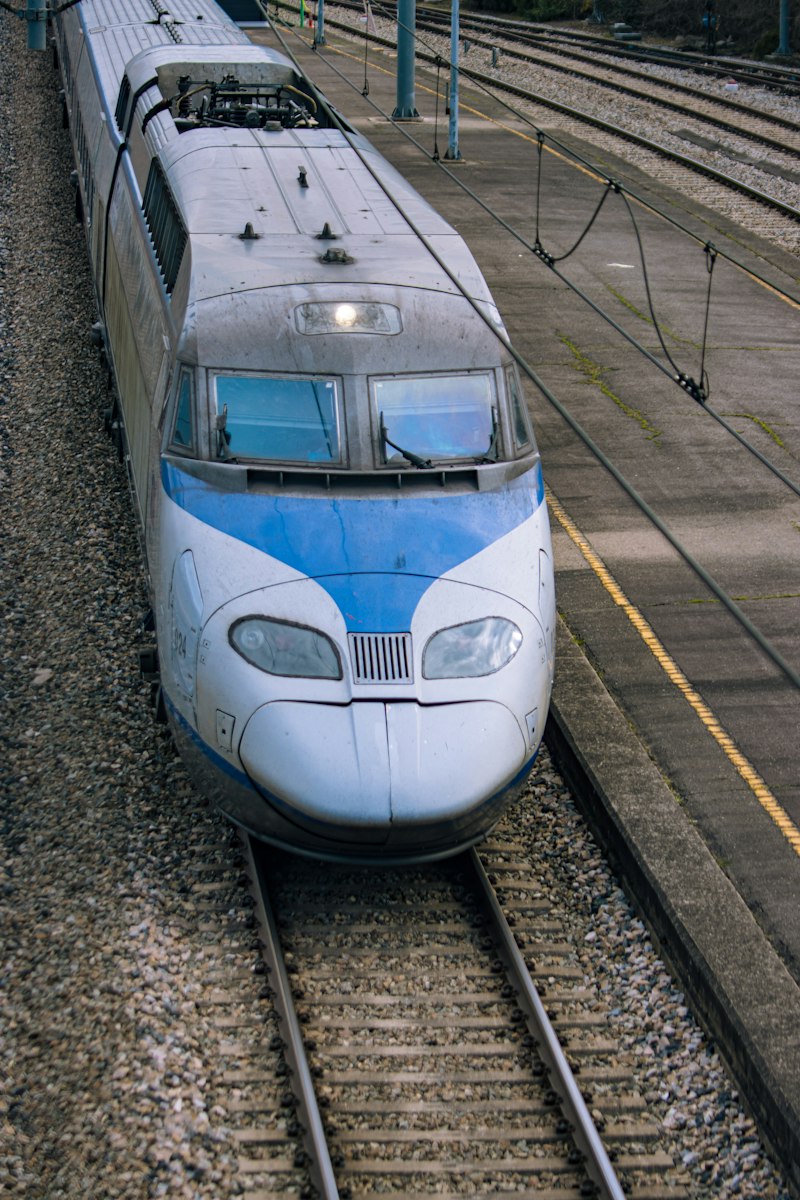
KTX (Korea Train eXpress) is Korea's high-speed rail network, operated by Korail. Trains connect Seoul to Busan, Gyeongju, Daegu, Jeonju, and other major cities at speeds up to 300km/h. The Seoul–Busan journey at 2 hours 15 minutes is shorter than the total time required for the equivalent domestic flight once airport check-in and transfer are counted. For most inter-city travel in Korea, KTX is the right choice.
Foreign travelers can book online in English, pay with international credit cards, and board at any major station with a printed or mobile QR ticket. Understanding seat classes, station names, and whether the KR Pass is worth it for your itinerary makes the difference between a seamless trip and an avoidable expense.
| Route | Duration | Fare (2026, one-way) |
|---|---|---|
| Seoul → Busan | 2h 15m | ₩59,800 |
| Seoul → Gyeongju (Singyeongju) | 2h 0m | ₩54,500 |
| Seoul → Daegu | 1h 40m | ₩43,500 |
| Seoul → Jeonju (KTX-eum) | 1h 30m | ₩28,000 |
| Busan → Gyeongju (Singyeongju) | 0h 30m | ₩11,900 |
*Based on official Korail schedules, updated for 2026.*
Fares are for standard (economy) seats. First class costs roughly 40–50% more. Children under 13 ride at half price.
How to Book KTX Tickets as a Foreigner
Three methods work reliably for foreign visitors, each with different trade-offs.
Korail Talk is Korail's official app, available in English. Search routes by date, select specific seat numbers, and pay with international Visa or Mastercard. Booking confirmation arrives by email and the QR code works at ticket gates without printing. Register an account before you travel — SMS verification during signup occasionally requires a Korean-issued number, but most international numbers now work without issue.
Klook sells KTX tickets and the KR Pass with a fully English interface and reliable support for international payment cards. Customer service is responsive if a ticket needs to be changed. For travelers who run into verification friction on Korail Talk, Klook is the cleanest fallback.
Ticket windows and kiosks at Seoul Station and Busan Station have English-language modes. Station staff at major hubs speak basic English. This works for flexible travelers — but Friday evening trains to Busan and weekend returns sell out days in advance, so same-day station booking carries real risk.
The Korail booking window opens 1 month before departure. For travel over Korean public holidays or summer weekends, book immediately when it opens.
Is the KR Pass Worth It?
For an aggressive multi-city itinerary, sometimes; for a single round trip, no. At 2026 prices — ₩131,000 for the 2-day select pass, ₩234,000 for the 4-day — a Seoul–Busan round trip on individual tickets (₩119,600) undercuts the pass, and even the Busan-plus-Gyeongju triangle (about ₩126,200 in single tickets) comes in slightly cheaper. The pass starts winning when you stack four or more long-haul train days, which is the shape of the Korea 10-Day Itinerary, where it remains the default recommendation. The full route-by-route break-even math, with worked itineraries, is in the KR Pass vs individual tickets comparison.
The KR Pass (Korail Pass) is an unlimited rail pass sold exclusively to foreign tourists. Korean nationals and foreign residents registered in Korea for more than 6 months are not eligible.
Two pass structures are available: the flexible pass (2-day or 4-day) lets you choose any 2 or 4 travel days within a 10-day window — useful when your itinerary has gaps between city stays. The consecutive pass (3-day or 5-day) covers every day for 3 or 5 consecutive days from activation — better for packed itineraries with daily train use.
Covered services: KTX, KTX-Sancheon, KTX-Eum, ITX-Saemaeul, ITX-Cheongchun, and Mugunghwa trains. Not covered: SRT (a separate private high-speed rail operator), the Seoul Metro subway system, and AREX airport railroad.
The pass does not function as a boarding pass on its own. For every KTX journey, you must separately reserve a seat — up to 2 seat reservations per travel day are included. Seat reservations are made at station service counters or through the Korail website.
Blackout periods: The KR Pass cannot be used on the most popular routes during Lunar New Year (설날), Chuseok (추석), and summer peak weeks (late July through early August). These are also the weeks when individual tickets sell out first, so plan around them if possible.
Seat Classes and How to Choose
KTX trains have two classes: standard and first. Standard class has 2-2 seating with reclinable seats, power outlets at every seat, and free Wi-Fi. First class has 2-1 seating, wider seats, and slightly more legroom — at a 40–50% fare premium.
Standing tickets (입석) are sold on some routes when all seats are booked. These allow you to board but require standing in the corridor or vestibule. For any journey over 1 hour, avoid these if you have luggage.
For the Seoul–Busan route, standard class is entirely comfortable for a 2-hour journey. First class makes more practical sense for very early morning departures or long return journeys when rest matters more than the fare difference.
When booking on the Korail app, the seat map lets you choose direction and window or aisle. Window seats on the east-facing side of the train (A/B seat numbers) catch coastal and mountain views on the Seoul–Busan southbound route.
Station Codes and Common Confusion Points
Seoul has two KTX departure stations. Seoul Station (서울역) handles most KTX routes — Busan, Gyeongju, Daegu, and Jeonju all depart from here. Yongsan Station (용산역) historically served as a secondary departure point but most services have consolidated at Seoul Station. Always check the departure station on your ticket — they are about 10 minutes apart on subway Line 1.
Gyeongju has two stations and this is where most travelers go wrong. Gyeongju Station (경주역) is in the city center, served only by slower regional trains. KTX trains stop at Singyeongju Station (신경주역), which sits outside the city, roughly 15–20 minutes from downtown by city bus or taxi. From Singyeongju, bus 700 connects to the main tourist area near Tumuli Park. Budget the extra transfer time when planning your first day. The Gyeongju travel guide covers the station-to-attraction connections in detail.
Busan Station (부산역) is straightforward — one main terminal serving all KTX trains, located on subway Line 1. The Busan first-timer's guide covers onward navigation from Busan Station to each neighborhood.
KTX vs Other Transport (Bus, Domestic Flight)
Planning a trip to Korea?
You know how the trains work. The planner decides which ones you actually need, and on which days. No sign-up needed.
Build My Korea Plan →| Option | Speed | Cost | Best For |
|---|---|---|---|
| KTX | Fastest, most reliable | Mid-range | Most travelers |
| Intercity Bus | Slower (4–5hrs Seoul–Busan) | Cheapest | Budget travelers, flexible schedule |
| Domestic Flight | Fast air time, but airport transfer adds 1.5–2hrs total | Similar or higher than KTX | Jeju routes only — no KTX to Jeju |
For Seoul–Busan and Seoul–Gyeongju, KTX wins on the combination of speed, reliability, and city-center-to-city-center convenience. Intercity buses are cheaper but take 4–5 hours and are subject to motorway traffic. Domestic flights to Busan and Gyeongju do not exist. For Jeju, flying from Gimpo or Incheon is the only option — KTX does not serve the island, and the 1-hour flight becomes 2.5–3 hours door-to-door including airport time, which is comparable to KTX to Busan.
The Korea Travel Budget Guide 2026 includes KTX fare estimates across daily spending tiers for multi-city itineraries.
Practical Tips
Holiday blackouts: Lunar New Year (설날) and Chuseok (추석) are the two highest-demand travel periods in Korea. Every KTX train between Seoul and Busan sells out within hours of the booking window opening, which is 1 month before departure. If your travel dates overlap with these periods, book the moment the window opens or restructure your itinerary around them. The summer peak (late July through early August) is the third most congested period.
Seat assignment: KTX is a fully reserved-seat service. Every ticket includes a car number and seat number. Check your ticket carefully before boarding — if no seat number appears, you may have purchased a standing ticket.
Luggage: Overhead racks inside the carriage fit small to medium bags. Large rolling suitcases should go in the dedicated luggage area at each end of the car, marked with a suitcase icon. These spaces fill quickly on busy trains. Board a few minutes before departure to secure the space.
Food on board: Vending machines operate in most carriages. A small refreshment cart runs on longer routes. Seoul Station has a full underground food court accessible before boarding — useful for early morning departures when platform-side options are limited.
For a broader overview of Korean public transit — subway and bus fares, and where to buy and reload a T-Money card — the Seoul transportation guide covers the practical setup most first-time visitors need before their first train journey.
Frequently Asked Questions
Can foreigners buy KTX tickets online?
Yes. The Korail Talk app supports English and accepts international credit cards. Klook also offers KTX booking and the KR Pass with an English interface.
How much does KTX from Seoul to Busan cost?
A standard one-way ticket costs about ₩59,800 (around $44) and takes 2 hours 15 minutes. First class costs roughly 40-50% more.
What is the KR Pass and is it worth it?
The KR Pass is an unlimited rail pass for foreign tourists only, covering KTX and most Korail trains. It's worth it if you're visiting at least two cities outside Seoul, since it often costs less than buying individual tickets.
Is there a KTX station in Gyeongju?
KTX trains stop at Singyeongju Station, located outside the city center. A taxi or local bus is needed to reach downtown Gyeongju, about 15-20 minutes away.
Does the KR Pass work on SRT or Seoul subway?
No. The KR Pass only covers KORAIL-operated trains like KTX, ITX, and Mugunghwa. It does not include SRT (a separate private high-speed rail) or the Seoul Metro subway.
How long does the KTX from Seoul to Gyeongju take?
KTX from Seoul to Singyeongju Station (Gyeongju's KTX stop) takes 2 hours (₩54,500 one-way, standard class). Singyeongju is outside Gyeongju city center — allow 15–20 minutes by local bus or taxi to reach downtown.
How long does the KTX from Seoul to Busan take?
KTX from Seoul to Busan takes 2 hours 15 minutes. A standard one-way ticket costs ₩59,800.
How much does the KTX from Busan to Gyeongju cost?
A standard one-way ticket from Busan to Singyeongju (Gyeongju's KTX station) costs ₩11,900. The journey takes about 30 minutes.
How long does the KTX from Seoul to Daegu take?
KTX from Seoul to Daegu takes 1 hour 40 minutes. A standard one-way ticket costs ₩43,500.
Make a plan that fits your trip
You know how the trains work. The planner decides which ones you actually need, and on which days. No sign-up needed.
Build My Korea Plan →