Korean Street Food in Seoul 2026: What to Eat and Where
“Tteokbokki, hotteok, bindaetteok, and more — the insider guide to Seoul's markets and street stalls, with ordering tips for non-Korean speakers.”
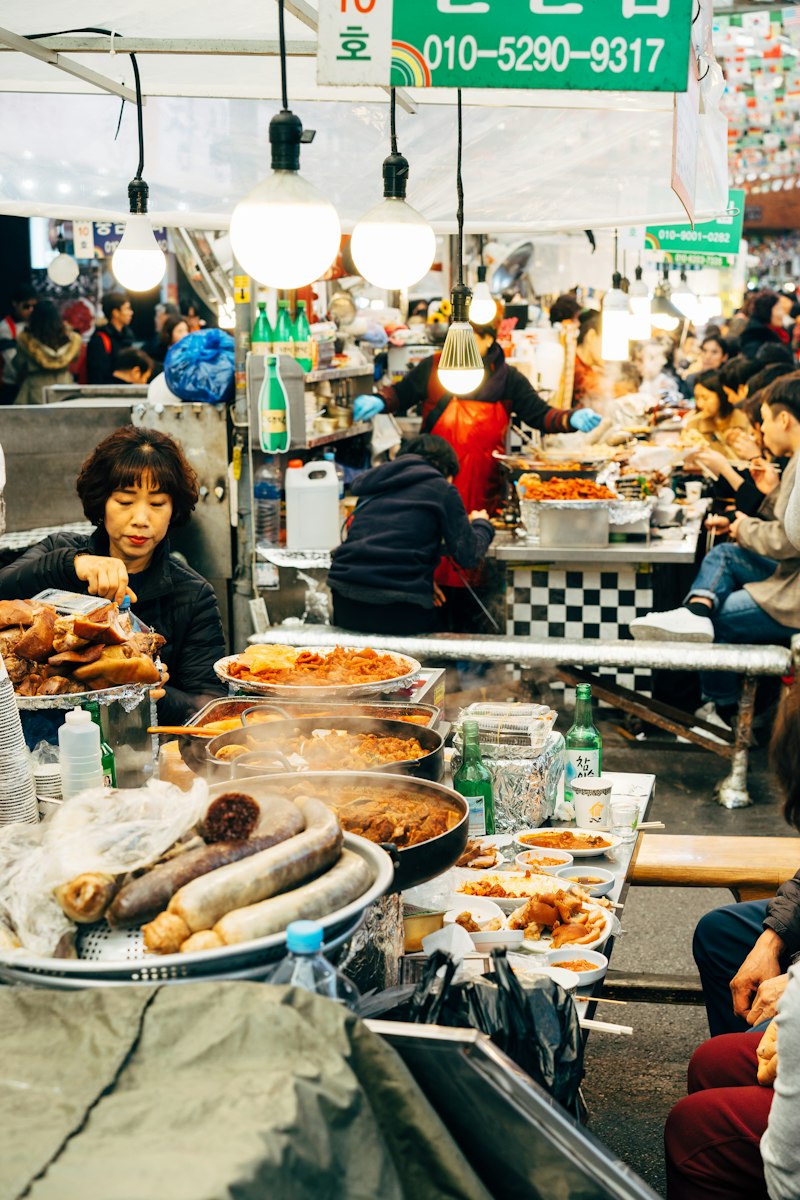
Korean Street Food Guide: What to Eat, Where to Go & How to Order Like a Local
Korean street food refers to the snacks, noodles, and small dishes sold from outdoor carts, market stalls, and food trucks across South Korea — typically priced between ₩1,000 and ₩5,000, eaten standing or on the go, and ordered without needing to speak Korean.
Korean street food is not a tourist attraction. It is infrastructure. Walk through any Seoul neighborhood at 1pm and you will find office workers standing at outdoor stalls eating tteokbokki over paper plates. Commuters buying triangle gimbap from a convenience store window. Students sharing a paper cone of twigim on a bench. Street food here is woven into the fabric of how people actually eat — affordable, fast, and available on nearly every block.
For foreign visitors, this creates an unusual opportunity. Unlike sit-down restaurants where language barriers can slow you down, street food operates almost entirely on instinct: point at something, hand over some bills, and start eating. The challenge is not ordering. The challenge is knowing what to order first.
| Must-try food | What it is | Price (2026) |
|---|---|---|
| Tteokbokki | Spicy rice cakes in red sauce | ₩3,000–5,000 |
| Hotteok | Sweet pancake with cinnamon filling | ₩2,000–3,000 |
| Gimbap | Seaweed rice rolls with vegetables | ₩3,000–5,000 |
| Korean corn dog | Fried hot dog on a stick, often with cheese | ₩3,000–4,500 |
| Bungeoppang | Fish-shaped pastry filled with red bean | ₩1,500–3,000 |
Best areas to try these: Gwangjang Market, Myeongdong, and Hongdae street stalls. Most vendors are cash-friendly but many now accept card or mobile pay in 2026.
One logistical note before you start: most traditional markets and older street stalls are cash only. Bring ₩30,000–50,000 on any market day. ATMs are available at every convenience store if you run short. For a full breakdown of daily spending in Korea at multiple budget levels, the Korea Travel Budget Guide 2026 covers every category in detail.
The Must-Try Street Foods
Tteokbokki (떡볶이) is the one dish that defines Korean street food culture more than any other. Cylindrical rice cakes simmered in a gochujang-based sauce — savory, spicy, slightly sweet, and deeply addictive. For first-timers: the heat level at most stalls is real. If you have low spice tolerance, try one piece before committing to a full portion. Almost every tteokbokki stall also serves eomuk — fish cake skewers soaked in a savory broth — and that broth is always free. Always drink it.
Hotteok (호떡) is a thick, chewy pancake filled with brown sugar, cinnamon, and crushed nuts. It caramelizes on the griddle and releases a flood of molten filling when you bite in. Technically a winter food, but available year-round at most markets. Wait thirty seconds after receiving yours — the filling holds heat long after the outside cools.
Bungeoppang (붕어빵) are fish-shaped pastries filled with red bean paste or custard. The fish shape is decorative; the filling is the point. Usually ₩1,000–2,000 for two pieces, which makes them among the best-value snacks in any Seoul market. The custard variety converts people who thought they disliked red bean.
Korean corn dogs (핫도그) bear almost no resemblance to their American counterparts. The batter is thick and crispy; the filling is usually mozzarella, sometimes mixed with sausage; the outside is dusted with sugar. Myeongdong and Hongdae have the highest concentration of corn dog stalls. Eat immediately — the cheese pull peaks in the first two minutes.
Gimbap (김밥) is seaweed-rolled rice with fillings — egg, vegetables, tuna, imitation crab — and while it resembles sushi in form, the flavor is entirely its own. Triangle gimbap at convenience stores like GS25 and CU costs around ₩1,200 and functions as a complete meal. Market gimbap, particularly the mayak gimbap at Gwangjang Market, is smaller, more intensely seasoned, and usually sold by weight.
Gyeran-ppang (계란빵) is an oval bread baked with a whole egg inside. The bread is slightly sweet; the egg is savory. At ₩1,000–1,500 per piece, it works as breakfast, a snack, or a late-night decision you will not regret.
Tornado potato (회오리 감자) is a spiral-cut potato deep-fried on a skewer until completely crisp, then dusted with a seasoning of your choice. Cheese dust is the correct answer. It has limited nutritional value and is completely worth eating.
Bindaetteok (빈대떡) is a mung bean pancake pan-fried in oil until the outside is crunchy and the interior stays dense and slightly earthy. This is Gwangjang Market's signature dish and one of the things that most distinguishes that market from everywhere else in Seoul. Pair it with makgeolli (막걸리), a milky rice wine served cold in a bowl. The combination is traditional and correct.
Where to Find the Best Street Food in Seoul
Gwangjang Market
Gwangjang has been operating since 1905, which makes it Seoul's oldest covered market. What separates it from more tourist-facing options is that locals still eat here daily. The fabric merchants and textile vendors who fill the upper floors send their employees downstairs for lunch. This is not a performance of market culture — it is the real version.
The food hall runs along the central corridor. Stalls specializing in bindaetteok sit at one end; vendors selling mayak gimbap occupy the middle; kalguksu (hand-cut noodle soup) fills the quieter corners. Mandu (dumplings) are available steamed or pan-fried at several stalls and are reliably excellent.
Netflix's Street Food: Asia featured Gwangjang, bringing a significant wave of international visitors. If you want to understand what the fuss is about — and why a Korean cooking show creates this kind of gravitational pull — the K-Drama restaurant guide to Seoul explores how Korean food culture translates into the screen experiences that send people here. Go on a weekday morning before 11am or after 2pm to avoid the main lunch rush. Cash only; bring ₩30,000 minimum. Sit at the communal tables and let the atmosphere arrive before ordering.
Hours: 8:30am–6pm daily. Individual stalls set their own hours.
Myeongdong Street Food Alley
The pedestrian street running through Myeongdong hosts roughly eighty stalls along a six-hundred-meter stretch. It is the most tourist-accessible street food experience in Seoul — some stalls accept card payments, English is more common than elsewhere, and the format is built for browsing. This is not a criticism. The food is genuinely good and the variety is unmatched.
The crowd here skews heavily foreign — on a typical afternoon, Korean shoppers are the minority on this stretch, and the density and pace feel closer to a Southeast Asian night market than a typical Seoul commercial street. That tourist concentration is exactly what makes the format work: stalls compete openly, menus are visual and multilingual, and browsing without a plan is part of the appeal.
Tornado potatoes, corn dogs, gyeran-ppang, and lobster skewers are the anchors of Myeongdong's stall culture. High customer volume means faster turnover and fresher oil, so the stalls with the longest queues are usually the ones to trust. Stalls open around 11am but peak in the afternoon and evening — avoid arriving at opening if you want full atmosphere.
Hongdae Street Food
Hongdae's street food scene runs younger and later than Gwangjang or Myeongdong. The university area concentration means corn dogs, dessert crepes, and fusion snack formats dominate over traditional dishes. Most stalls stay open until midnight or later. Card payments are widely accepted. The atmosphere is casual and loud in the best possible way.
Seoul Bamdokkaebi Night Market
The Bamdokkaebi (Night Goblin) Night Market runs on Friday and Saturday evenings from March through October, primarily at Yeouido Hangang Park and Banpo Hangang Park. Food trucks — a mix of traditional Korean dishes and fusion formats — operate alongside live music and Han River views. It is the right evening activity if you are in Seoul on a weekend and want food with a backdrop.
How to Order Without Speaking Korean
Point and maintain eye contact. Every street food vendor has processed hundreds of pointed fingers per day and will understand your request without explanation.
Show fingers for quantity. Two fingers means two portions. This works universally across every stall and market.
Three phrases cover most interactions:
Install Papago before you travel. The camera translation function reads Korean menu boards and price signs in real time, which removes virtually all friction at markets. For sit-down restaurants after your street food circuit, the guide to booking restaurants in Korea as a foreigner covers every reservation platform that works without Korean.
Practical Tips Before You Go
Planning a trip to Korea?
Answer a few quick questions and get a personalized day-by-day itinerary — cities, food, and transit included. No sign-up needed.
Build My Korea Plan →Cash is essential at traditional markets. Gwangjang and Namdaemun operate almost entirely on cash. Myeongdong and Hongdae are more card-friendly, but carrying ₩50,000 in small bills removes friction at every stall.
Long lines signal quality, not inconvenience. Korean street food stalls earn their queues — the ones with thirty-minute waits are almost always worth the time. Join the queue.
Eomuk broth at tteokbokki stalls is free and always offered. It is hot, savory, and excellent alongside anything spicy. Accept it every time.
Vegetarians should ask about broth bases. Tteokbokki sauce frequently uses anchovy stock as its foundation, and Korean soups rarely run fully vegetarian by default. Saying "멸치 없이" (myeolchi eopsi — "without anchovy") is worth attempting, though not every stall can accommodate.
Convenience store food is a legitimate daily option, not a fallback. Triangle gimbap from GS25 or CU, instant ramen prepared at the in-store hot water station, and freshly packed dosirak boxes constitute a full and satisfying meal for under ₩5,000. This is how a significant portion of Seoul eats on workdays.
The best time for markets is weekday lunch between 11am and 1pm, when locals make up the majority of diners and stalls are running at peak production. Friday evenings offer the full atmosphere experience — more crowded, more energy, longer queues.
Book a Guided Street Food Experience
If you want a structured introduction to Korean market and street food culture with no language barrier, Klook runs English-language cooking classes and market tours that pair hands-on cooking with guided market walks. Both options below include ingredient context and market navigation that a solo stall visit cannot provide.
Final Thoughts
Street food is the fastest way into Korean food culture — not because it is simpler than restaurant dining, but because it is more direct. The food is made in front of you, priced transparently, and eaten standing or on a bench. No performance, no reservation, no language barrier that a pointed finger cannot solve.
Once you have eaten your way through a market morning, you will understand something about how Seoul operates that no guidebook explains directly. The food is an entry point. Follow it.
For planning the rest of your Seoul itinerary and knowing where to go next, the Busan vs Jeju guide covers both destinations with practical itineraries and honest cost comparisons for first-time visitors.
Frequently Asked Questions
What is Korean street food?
Korean street food includes dishes like tteokbokki (spicy rice cakes), hotteok (sweet pancakes), gimbap (rice rolls), and Korean corn dogs, typically sold from street carts and market stalls.
Where is the best street food in Seoul?
Gwangjang Market, Myeongdong, and Hongdae are the most popular areas, each offering a different mix of traditional and trendy street food options.
How much does Korean street food cost in 2026?
Most street food items cost ₩1,500–5,000 (about $1–4), making it one of the cheapest ways to eat well in Seoul.
Can I pay by card for Korean street food?
Many street food vendors in 2026 accept card or mobile payment, though some smaller stalls, especially in markets, still prefer cash.
Is Korean street food spicy?
Some dishes like tteokbokki are spicy, but many options like hotteok, gimbap, and Korean corn dogs are mild and approachable for sensitive palates.
Make a plan that fits your trip
This guide gives one version. Get one built around your own dates, budget, and interests — with Korean place names you can paste straight into Naver Map. No sign-up needed.
Build My Korea Plan →